Single-Cell RNA Sequencing (scRNA-seq)
Resolve cell populations and gene expression programs at single-cell resolution to uncover heterogeneity, rare cell states, and mechanisms that bulk RNA-seq can miss.
For fastest scoping, send: organism/tissue, estimated cell count, desired cells per sample, sample viability method, and whether you need sequencing only or full bioinformatics.
Why Single-Cell Transcriptomics?
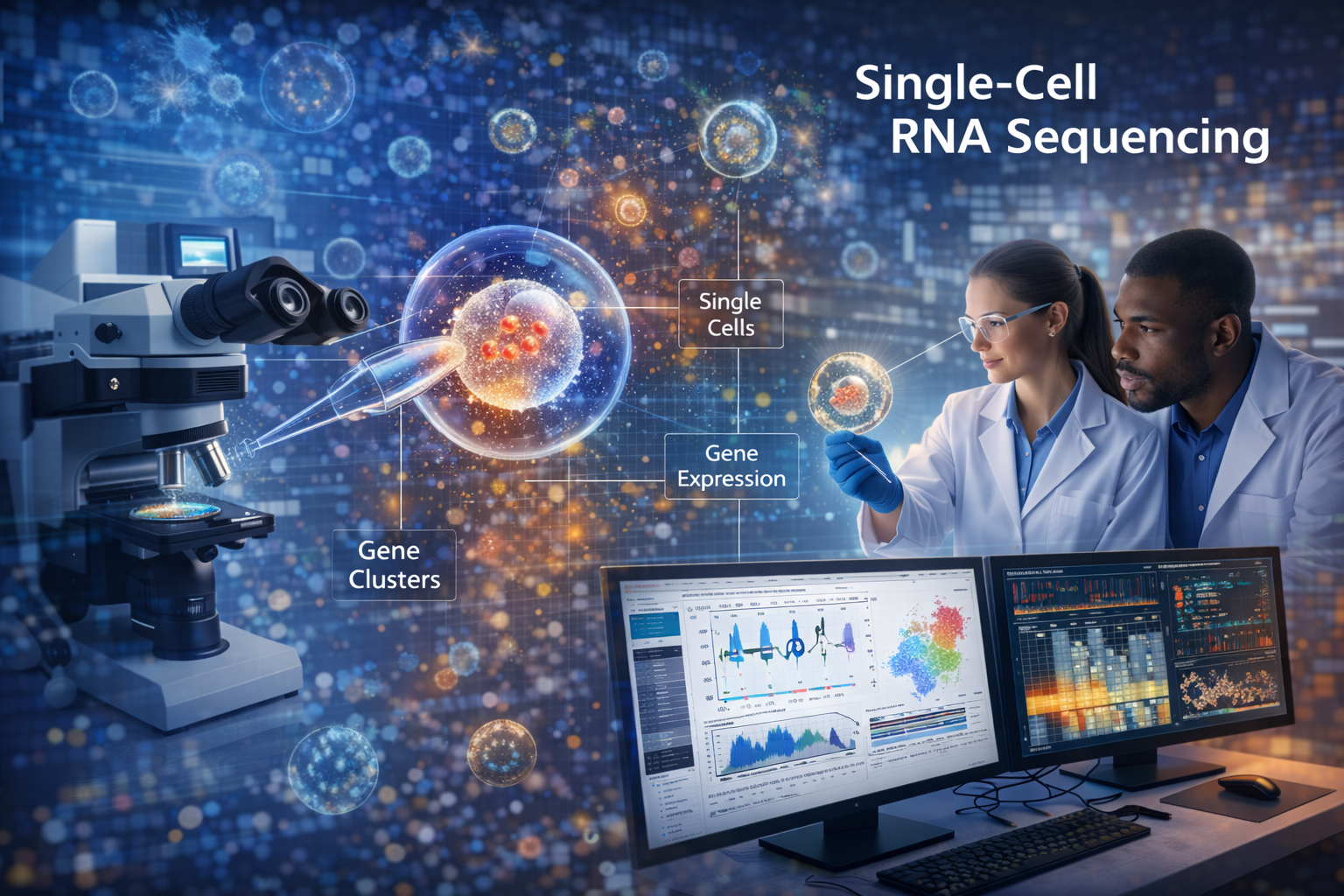
Single-cell RNA sequencing profiles gene expression in individual cells, enabling cell-type discovery, immune profiling, tumor microenvironment analysis, and identification of rare or transient states. MR DNA supports Illumina-based single-cell workflows with optional end-to-end bioinformatics.
What You Can Discover
- Cell-type composition and subpopulation structure
- Rare cell states and transitional trajectories
- Condition-specific programs via differential expression
- Regulatory networks and pathway enrichment
Typical Use Cases
- Immunology (PBMCs, immune activation, antigen response)
- Oncology (tumor heterogeneity, TME, resistant clones)
- Development (lineage, differentiation, fate decisions)
- Microbiology-host studies (host response in tissues)
Workflow Options
We can support projects from extracted RNA/cells through sequencing and analysis. Specific methods depend on sample type and study goals.
Library & Sequencing
- Single-cell gene expression libraries (Illumina-ready)
- Sample multiplexing options when applicable
- Depth planning based on cell count, complexity, and goals
- Sequencing on high-throughput Illumina platforms
Bioinformatics (Optional)
- QC (cell filtering, doublet detection, ambient RNA checks)
- Dimensionality reduction (PCA/UMAP) and clustering
- Marker gene identification and cell-type annotation support
- Differential expression and pathway enrichment summaries
Deliverables
- FASTQ files and summary QC reports
- Count matrices and metadata
- Cluster plots (UMAP), marker tables, and DE summaries reports etc (Optional if analysis selected)
Single-Cell RNA-seq FAQ
Quick answers to help scope your project.
How many cells should I sequence per sample?
It depends on tissue complexity and study goals. Many studies target thousands to tens of thousands of cells per sample. Share your organism/tissue and endpoints, and we’ll recommend a sensible cell count and sequencing depth plan.
Do you provide sample-to-results workflows?
We can scope projects ranging from sequencing-only to end-to-end analysis. Requirements vary based on sample type, handling, viability, and the chosen single-cell workflow.
What information do you need for a quote?
Organism/tissue, number of samples, approximate cells per sample, viability/handling details, and whether you need sequencing only or full bioinformatics (QC, clustering, markers, and differential expression).
Explore single-cell biology
Tell us your sample type and study goals. We’ll help scope cell counts, sequencing depth, and deliverables.